
ترانيم دجلة
ملكة متوجة
- إنضم
- 2007/05/29
- المشاركات
- 1,114
Native American cuisine of North America
American Indians of the Eastern Woodlands planted what was known as the "Three Sisters": corn, beans, and squash. In addition, a number of other domesticated crops were popular during some time periods in the Eastern Woodlands, including a local version of quinoa, a variety of amaranth, sumpweed/marsh elder, little barley, maygrass, and sunflower.
In the Northwestern part of what is now the United States Native Americans used salmon and other fish, seafood, mushrooms, and berries, among other foods.[4] They were hunter-gatherers, not needing agriculture to supplement the abundant food supplies of their habitat. In what is now California, acorns were ground into flour, making up about 75 per cent of the diet,[5] and dried meats were prepared during the season when drying was possible.[6]
[edit] Some Dishes
 http://en.wikipedia.org/wiki/File:MsSh_Cornbread.jpg
Corn bread
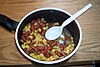 http://en.wikipedia.org/wiki/File:Succotash.jpg
Succotash
This region comprises the cultures of the Arawaks, the Caribs, and the Ciboney. The Taíno of the Greater Antilles were the first New World people to encounter Columbus. Prior to European contact, these groups foraged, hunted, fished. The Taíno cultivated cassava, sweet potato, maize, beans, squash, pineapple, peanuts, and peppers. Today these groups have mostly vanished, but their culinary legacy lives on.
 http://en.wikipedia.org/wiki/File:Jerk_chicken_plate.jpg
Jerk chicken with plaintains, rice and honey biscuit
[edit] Native American cuisine of Mesoamerica
Main articles: Aztec cuisine and Maya cuisine
The pre-conquest cuisine of the Native Americans of Mesoamerica made a major contribution to shaping modern-day Mexican cuisine. The cultures involved included the Aztec, Maya, Olmec, and many more (see the List of pre-Columbian civilizations).
[edit] Some known dishes
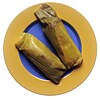 http://en.wikipedia.org/wiki/File:Tamales.jpg
Tamales
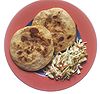 http://en.wikipedia.org/wiki/File:Pupusas.jpg
Pupusas
[edit] Andean cultures
Main article: Inca cuisine
This currently includes recipes known from the Quechua, Aymara and Nazca of the Andes.
 http://en.wikipedia.org/wiki/File:Roast_Guinea_Pig.jpg
Roast guinea pig (cuy)
 http://en.wikipedia.org/wiki/File:Ceviche_del_Perú.jpg
Ceviche
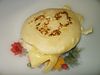 http://en.wikipedia.org/wiki/File:Arepa_asada.JPG
Cheese-filled arepa
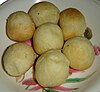 http://en.wikipedia.org/wiki/File:Pao_de_queijo.jpg
Chipa
The earliest utensils, including knives, spoons, grinders, and griddles, were made from all kinds of organic materials, such as rock and animal bone. Gourds were also initially cultivated, hollowed, and dried to be used as bowls, spoons, ladels, and storage containers. Many Native American cultures also developed elaborate weaving and pottery traditions for making bowls, cooking pots, and containers. Nobility in the Andean and Mesoamerican civilizations were even known to have utensils and vessels smelted from gold, silver, copper, or other minerals.
American Indians of the Eastern Woodlands planted what was known as the "Three Sisters": corn, beans, and squash. In addition, a number of other domesticated crops were popular during some time periods in the Eastern Woodlands, including a local version of quinoa, a variety of amaranth, sumpweed/marsh elder, little barley, maygrass, and sunflower.
In the Northwestern part of what is now the United States Native Americans used salmon and other fish, seafood, mushrooms, and berries, among other foods.[4] They were hunter-gatherers, not needing agriculture to supplement the abundant food supplies of their habitat. In what is now California, acorns were ground into flour, making up about 75 per cent of the diet,[5] and dried meats were prepared during the season when drying was possible.[6]
[edit] Some Dishes
 http://en.wikipedia.org/wiki/File:MsSh_Cornbread.jpg
Corn bread
 http://en.wikipedia.org/wiki/File:Succotash.jpg
Succotash
- Corn bread
- Nokake, Algonquin hoecakes
- Fry bread is a dish made from ingredients distributed to Native Americans living on reservations.
- Bean bread, made with corn meal and beans; popular among the Cherokee
- Black drink, or asi, a Southeastern ceremonial drink made from the Yaupon Holly
- Succotash, a trio of lima beans, tomatoes and corn
- Pemmican, a concentrated food consisting of dried pulverized meat, dried berries, and rendered fat
- Psindamoakan, a Lenape hunter's food made of parched cornmeal mixed with maple sugar
- Bird brain stew, from the Cree tribe [1]
- Buffalo stew, from the Lakota also called Tanka-me-a-lo [2]
- Acorn mush, from the Miwok people [3]
- Wojape, a Plains Indian pudding of mashed, cooked berries
- Dry meats Jerky, smoked Salmon strips
- Piki bread Hopi
- Green chili stew
- Mutton stew Navajo
- Pueblo bread
- Walrus Flipper Soup, Inuit dish made from walrus flippers.
- Stink Fish, Inuit dish, of dried fish, underground, until nice & ripe then eaten for later consumption, also done with fish heads.
- Salted Salmon Inuit dish, brined salmon in a heavy concentration of salt water left for months to soak up salts.
- Akutaq, also called "Eskimo Ice Cream", made from caribou or moose tallow and meat, berries, seal oil, and sometimes fish, whipped together with snow or water.
This region comprises the cultures of the Arawaks, the Caribs, and the Ciboney. The Taíno of the Greater Antilles were the first New World people to encounter Columbus. Prior to European contact, these groups foraged, hunted, fished. The Taíno cultivated cassava, sweet potato, maize, beans, squash, pineapple, peanuts, and peppers. Today these groups have mostly vanished, but their culinary legacy lives on.
 http://en.wikipedia.org/wiki/File:Jerk_chicken_plate.jpg
Jerk chicken with plaintains, rice and honey biscuit
- Jerk, a style of cooking meat that originated with the Taíno of Jamaica. Meat was applied with a dry rub of allspice, Scotch bonnet pepper, and perhaps additional spices, before being smoked over fire or wood charcoal.
- Casabe, a flatbread made from yuca root widespread in the Pre-Columbian Caribbean and Amazonia.
[edit] Native American cuisine of Mesoamerica
Main articles: Aztec cuisine and Maya cuisine
The pre-conquest cuisine of the Native Americans of Mesoamerica made a major contribution to shaping modern-day Mexican cuisine. The cultures involved included the Aztec, Maya, Olmec, and many more (see the List of pre-Columbian civilizations).
[edit] Some known dishes
 http://en.wikipedia.org/wiki/File:Tamales.jpg
Tamales
- Tacos
- Tamales
- Tlacoyos (gordita)
- Pozole
- Mole
- Guacamole
- Salsa
- Mezcal
- Tortillas
- Champurrado, a chocolate drink [4]
 http://en.wikipedia.org/wiki/File:Pupusas.jpg
Pupusas
- Xocolātl
- Pejelagarto, a fish with an alligator-like head seasoned with the amashito chile and lime [5]
- Pulque
- Chili
- Pupusas, thick cornmeal flatbread from the Pipil culture of El Salvador
- Alegría, a candy made from puffed amaranth and boiled-down honey or maguey sap, in ancient times formed into the shapes of Aztec gods
- Balché, Mayan fermented honey drink
[edit] Andean cultures
Main article: Inca cuisine
This currently includes recipes known from the Quechua, Aymara and Nazca of the Andes.
- Grilled guinea pig, a native to most of the Andes region this small rodent has been culivated for at least 4000 years
 http://en.wikipedia.org/wiki/File:Roast_Guinea_Pig.jpg
Roast guinea pig (cuy)
- Fried green tomatoes, a nightshade relative native to Peru
- Saraiaka, a corn liquor [6].
- Chicha, a generic name for any number of indigenous beers found in South America. Though chichas made from various types of corn are the most common in the Andes, chicha in the Amazon Basin frequently use manioc. Variations found throughout the continent can be based on amaranth, quinoa, peanut, potato, coca, and many other ingredients.
- Chicha morada, a Peruvian, sweet, unfermented drink made from purple corn, fruits, and spices.
- Colada morada, a thickened, spiced fruit drink based on the Andean blackberry, traditional to the Day of the Dead ceremonies held in Ecuador. It is typically served with guagua de pan, a bread shaped like a swaddled infant (formerly made from cornmeal in Pre-Columbian times), though other shapes can be found in various regions.
- Quinoa Porridge
- Ch'arki, a type of dried meat
- Humitas, similar to modern-day Tamales, a thick mixture of corn, herbs and onion, cooked in a corn-leaf wrapping. The name is modern, meaning bow-tie, because of the shape in which it's wrapped.
- Pachamanca, stew cooked in a hautía oven
 http://en.wikipedia.org/wiki/File:Ceviche_del_Perú.jpg
Ceviche
- Pataska, spicy stew made from boiled maize, potatoes, and dried meat.
- Ceviche, marinated in acidic tumbo juice in Pre-Columbian times
- Cancha or tostada, fried golden hominy
- Llajua, salsa of Bolivia
- Llapingachos, mashed-potato cakes from Ecuador
 http://en.wikipedia.org/wiki/File:Arepa_asada.JPG
Cheese-filled arepa
- Arepa, a maize-based bread originating from the indigenous peoples of Colombia and Venezuela
- Cauim, a fermented beverage based on maize or manioc broken down by the enzymes of human saliva, traditional to the Tupinambá and other indigenous peoples of Brazil
- Curanto, a Chilean stew cooked in an earthen oven originally from the Chono people of Chiloé Island
- Merken, a ají powder from the Mapuche of Patagonia
- Pira caldo, Paraguayan fish soup
 http://en.wikipedia.org/wiki/File:Pao_de_queijo.jpg
Chipa
- Chipa, a corn flour or manioc-based bread traditional to Paraguay
- Yerba mate, a tea made from the holly of the same name, derived from Guaraní
The earliest utensils, including knives, spoons, grinders, and griddles, were made from all kinds of organic materials, such as rock and animal bone. Gourds were also initially cultivated, hollowed, and dried to be used as bowls, spoons, ladels, and storage containers. Many Native American cultures also developed elaborate weaving and pottery traditions for making bowls, cooking pots, and containers. Nobility in the Andean and Mesoamerican civilizations were even known to have utensils and vessels smelted from gold, silver, copper, or other minerals.
- Molinillo, a device used by Mesoamerican royalty for frothing cacao drinks


